Tools Of The Trade - Lenses
Beautiful Canon Glass: The Lenses I Actually Use
People love talking about cameras, but the real investment is almost always the glass. Camera bodies change constantly. New sensors come out, autofocus gets better, files get cleaner, and everyone starts talking about the next big thing. But lenses are different. A good lens can stay in your bag for years and keep earning its place.
I don’t bring every lens to every shoot. That would be ridiculous. I try to pair the right lens with the right job. A family portrait does not need the same kit as a wedding day. A real estate shoot does not need the same kit as a corporate event. A packed reception does not need the same approach as a quiet portrait outside during golden hour.
These are the Canon RF lenses I use, why I use them, and where they actually make sense in real-world photography.
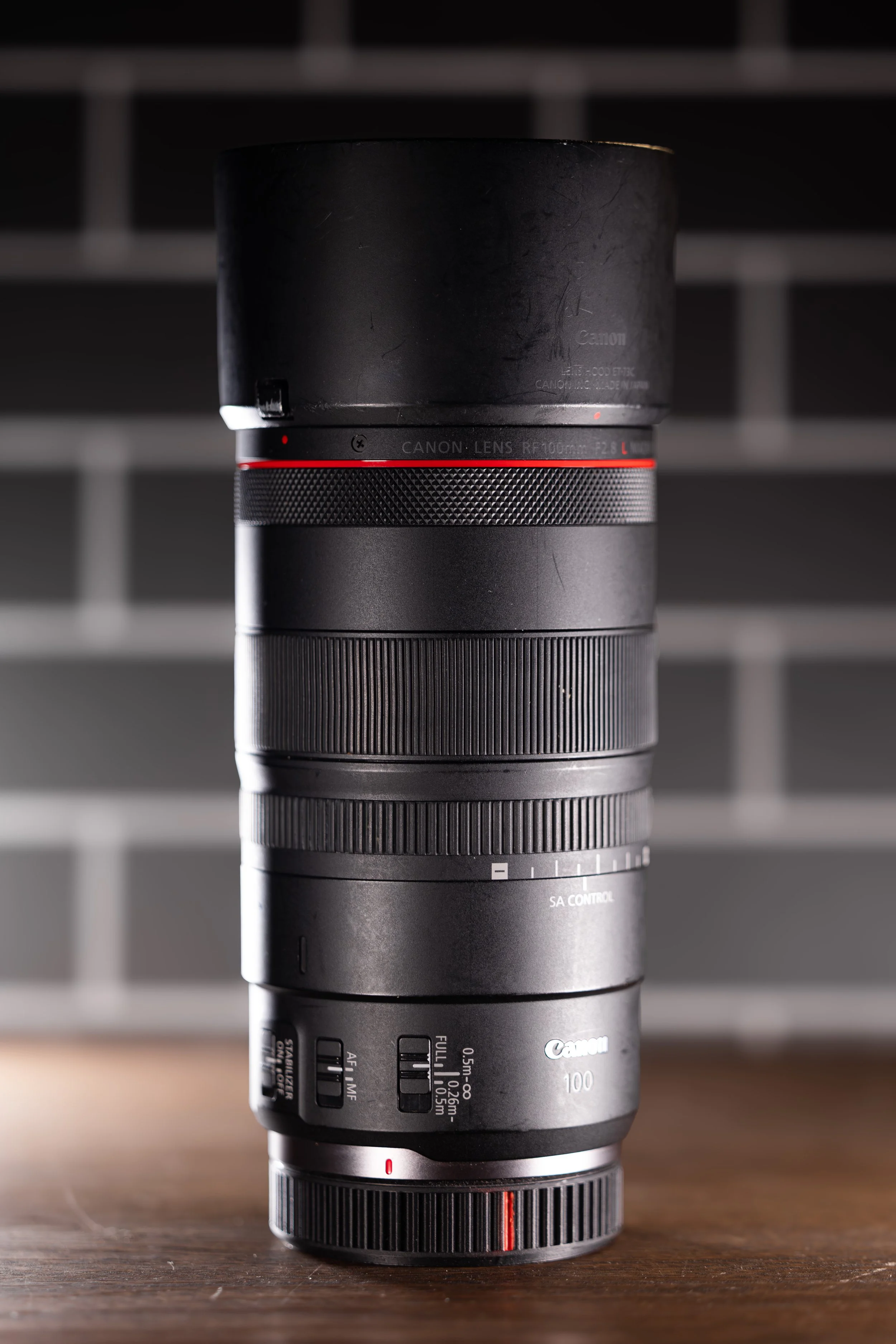
Canon RF 100mm F2.8 L Macro IS USM
This is my close-up detail lens.
I use it for wedding rings, food, invitation suites, jewelry, flowers, textures, and all the little details that help tell the full story of a wedding day. This is the lens I grab when I want to get close and show off something small in a big way.
Canon lists the RF 100mm Macro with a minimum focusing distance of 0.86 ft / 0.26m, 1.4x maximum magnification, 17 elements in 13 groups, and a 9-blade aperture. It also has Canon’s Hybrid IS system, and Canon lists the lens at about 1.6 lbs and 5.83 inches long.
For me, this is mostly a wedding lens. It is not usually living on my camera all day, but when I need it, nothing else really replaces it. The honest problem is that I probably do not use it as much as I should. Some of the best detail shots come from this lens, but you have to intentionally slow down and use it.
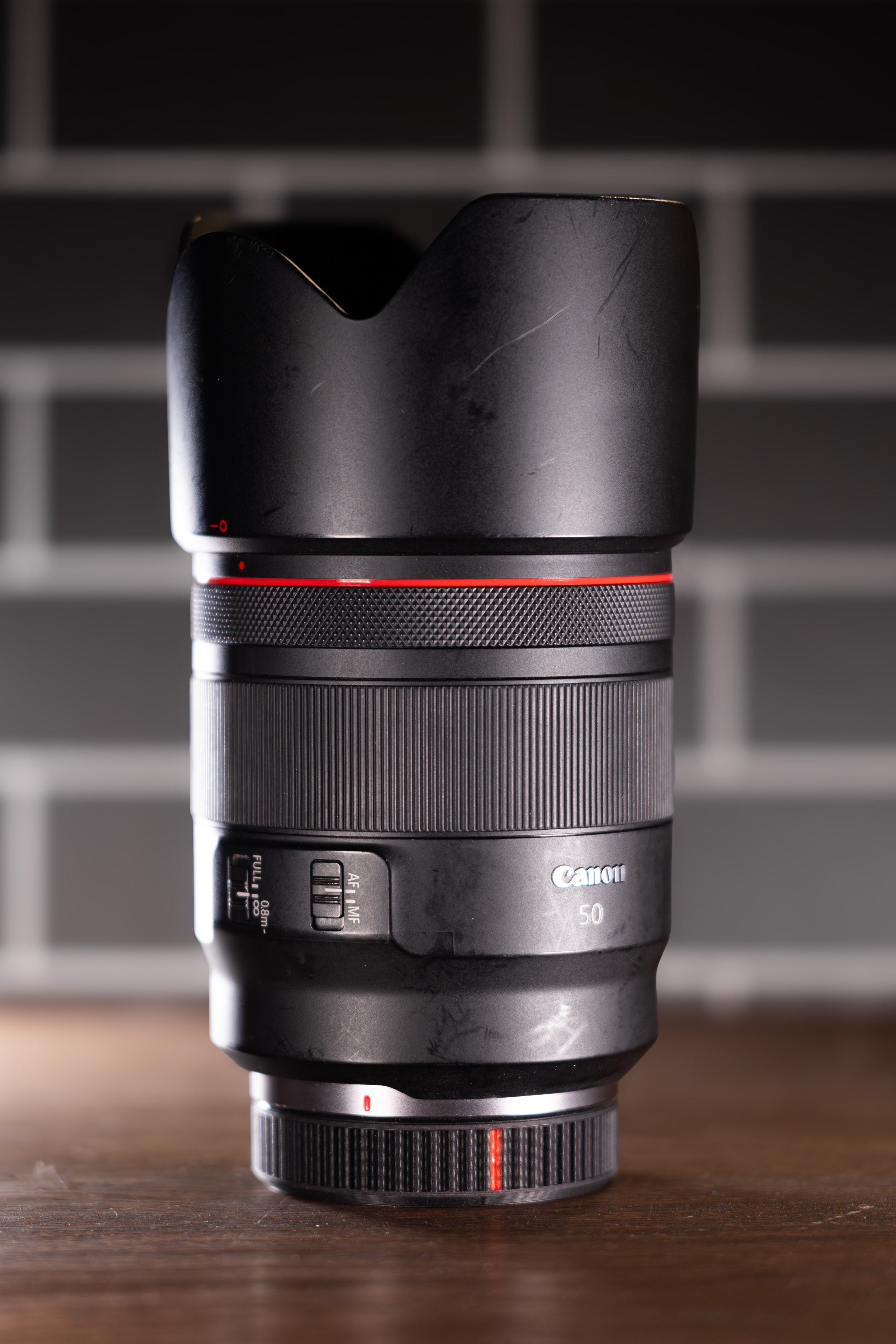
Canon RF 50mm F1.2 L USM
This is one of those lenses that makes people understand the difference between a regular photo and a professional-looking photo.
I use it for portraits, wedding details, getting-ready moments, events, and anything where I want strong subject separation. The f/1.2 aperture gives that shallow depth-of-field look people love. Most clients may not know the technical term for bokeh, but they know when the background melts away and the subject pops.
Canon lists the RF 50mm F1.2 with a minimum focusing distance of 1.31 ft / 0.40m, a bright f/1.2 maximum aperture, three aspherical elements, one UD element, dust- and water-resistant construction, and a control ring for direct setting changes.
Prime lenses tend to be incredibly sharp, but I also think every lens has its own sweet spot. Some lenses might look their best around f/2.5. Others might really hit at f/4. Some of that is measurable, and some of it is personal taste.
For me, the 50mm F1.2 is about intention. It makes the subject feel important.
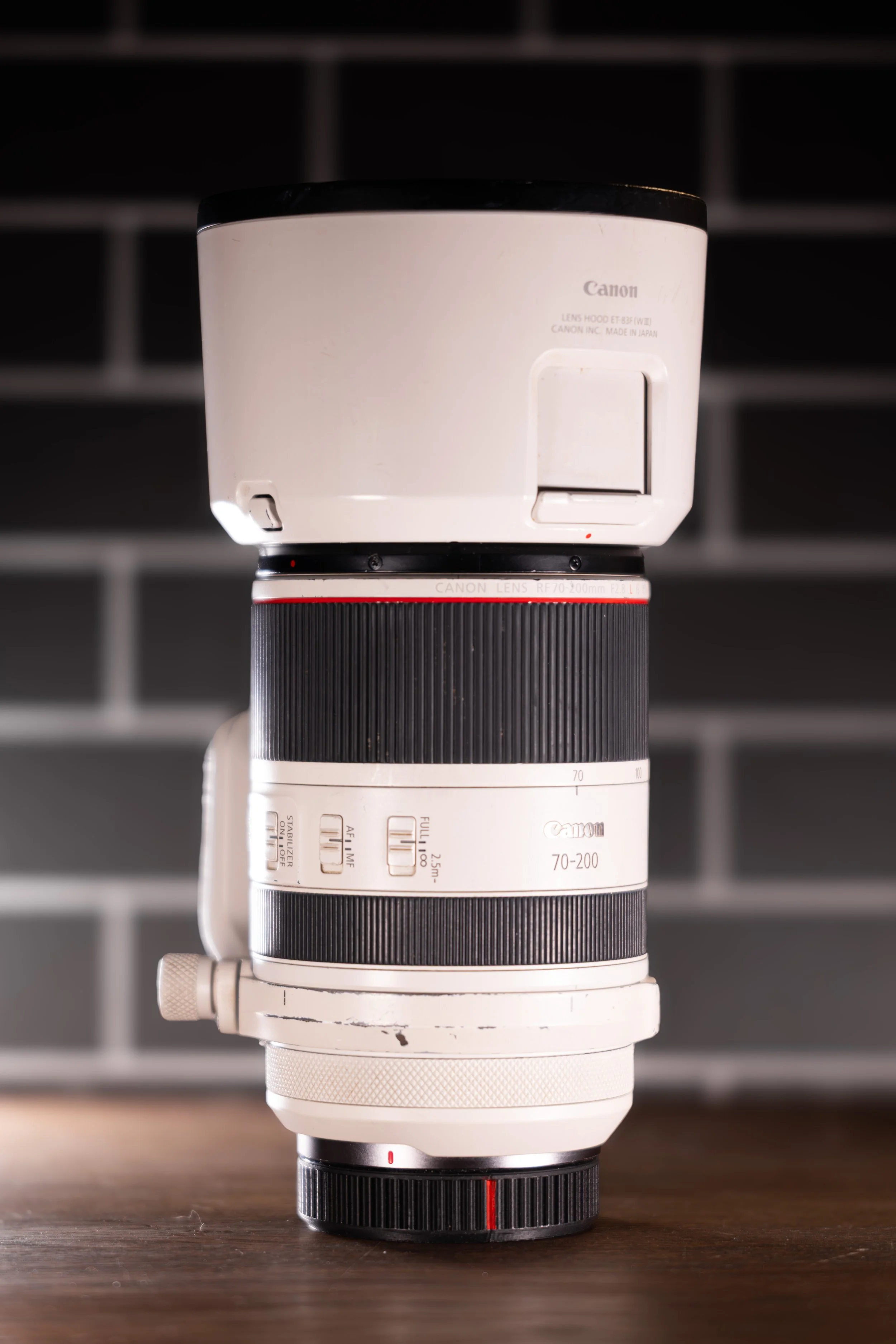
Canon RF 70-200mm F2.8 L IS USM
This is my candid-event lens and one of the most useful wedding lenses in the bag.
I use it when I want tight shots without standing right on top of people. It is great during ceremonies, cocktail hours, speeches, receptions, corporate events, and any situation where I want people to act naturally because they do not realize I am taking their photo.
Canon lists the RF 70-200mm F2.8 with 5 stops of optical image stabilization, Dual Nano USM autofocus, and a minimum focusing distance of 2.3 ft / 0.7m. It also has 0.23x maximum magnification and a 77mm filter size.
This lens lets me disappear a little. I can stand back and still get close emotionally. That matters at weddings and events.
With off-camera lighting, this lens can create some amazing images. That said, I do not always fully trust f/2.8 in very dark reception lighting. It is a great aperture, but it is not magic. Stabilization helps with camera movement, but it does not freeze a person dancing in bad light. That is where lighting, timing, and experience still matter.
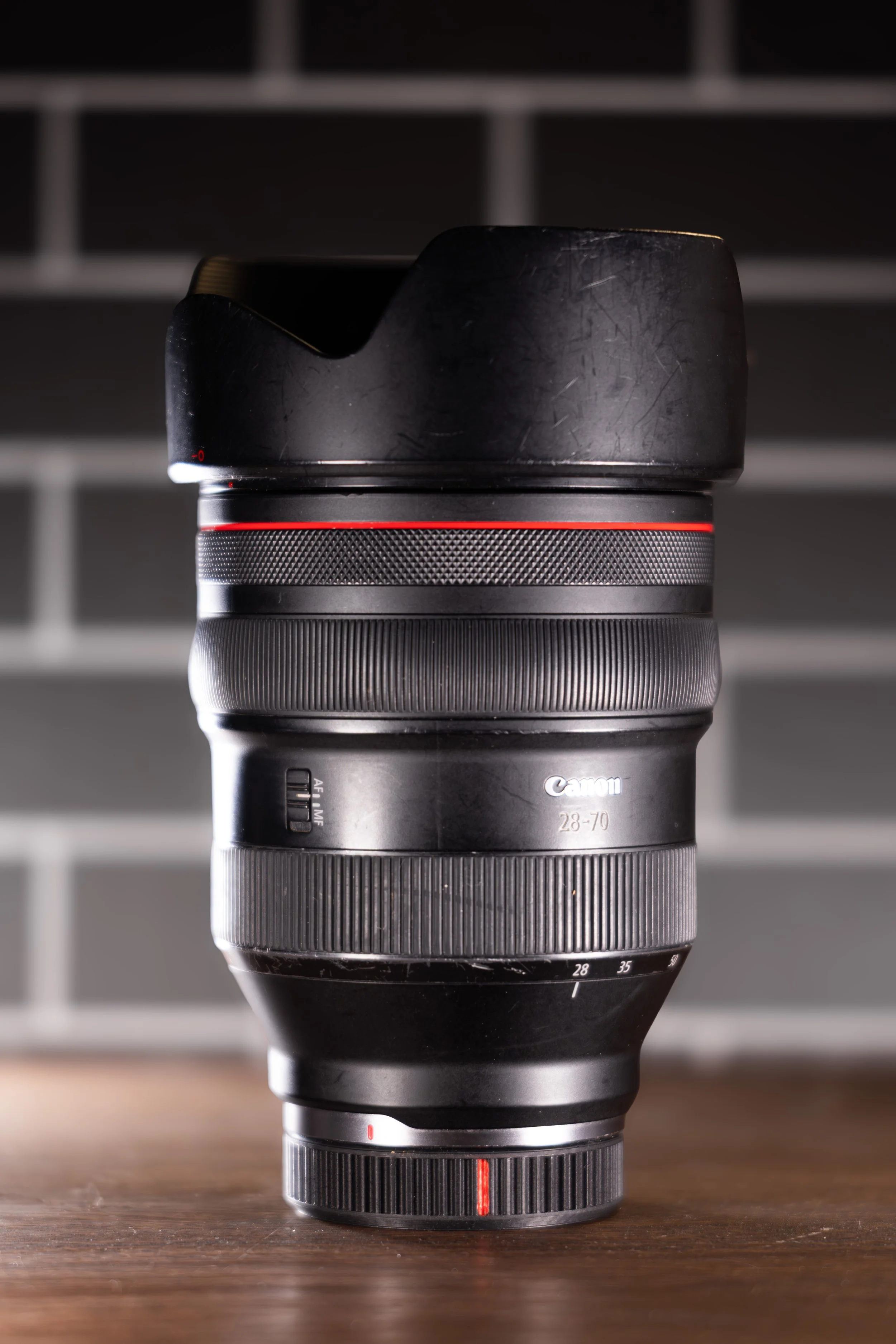
Canon RF 28-70mm F2 L USM
This is the beast.
The RF 28-70mm F2 is basically a high-end everyday zoom that behaves more like a bag of prime lenses than a normal kit lens. It is big, heavy, expensive, and absolutely useful.
Canon lists it as a 28-70mm f/2 with 19 elements in 13 groups, a closest focusing distance of 1.28 ft / 0.39m, a 95mm filter size, and a weight of about 3.15 lbs / 1430g. Canon has also described it as a zoom lens that can take the place of multiple fixed focal length lenses, with performance approaching prime lenses.
When I bought it, it was around $3,500. That is a lot of money for a lens, but this is one of the lenses I bring almost everywhere. It is good for portraits, wedding prep, receptions, details, event coverage, and everyday work.
Important note: this lens does not have lens-based image stabilization. If I am getting stabilization, that is coming from the camera body, not the lens itself.
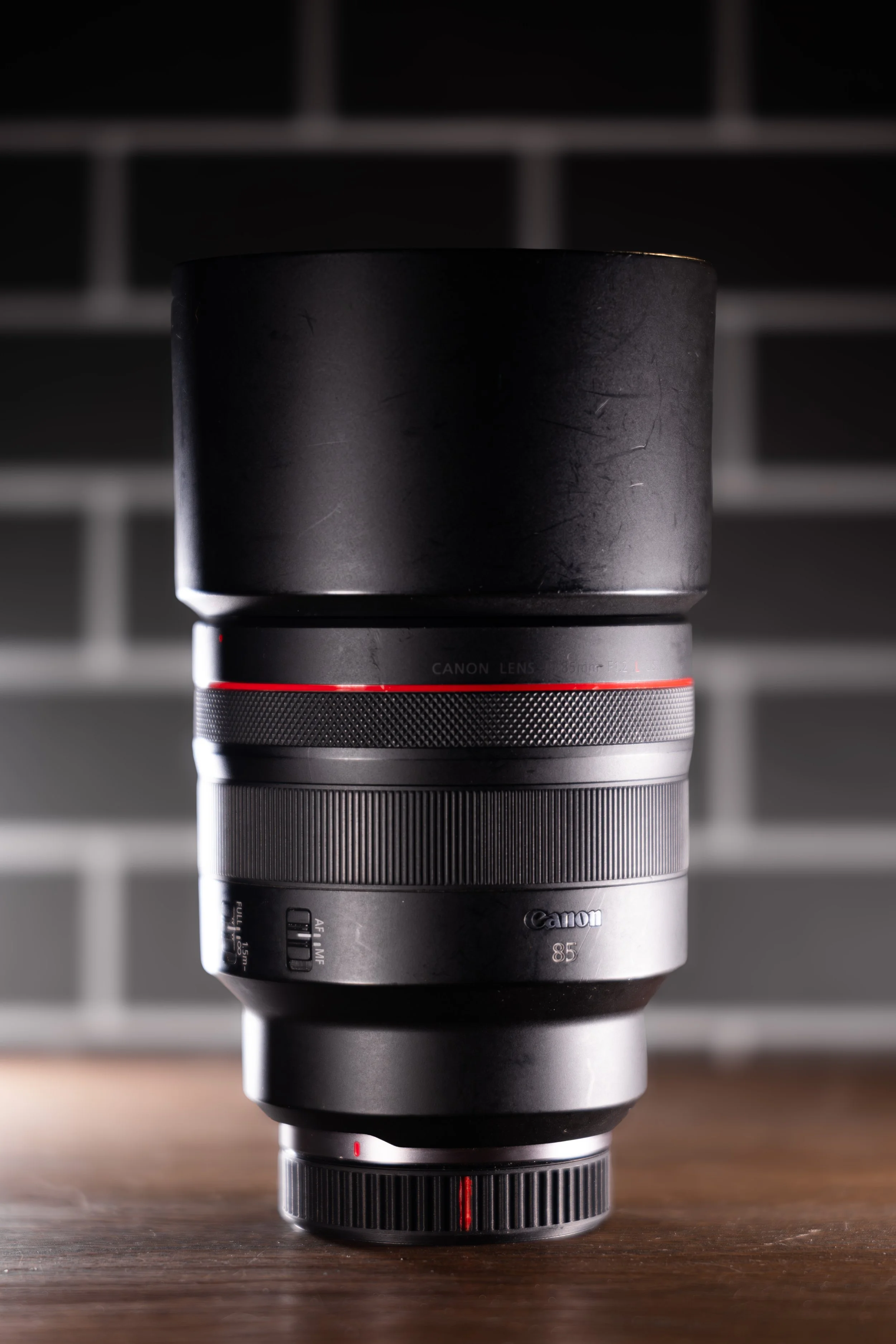
Canon RF 85mm F1.2 L USM
This is my go-to portrait lens.
When I am doing exterior portraits, interior portraits, headshots, wedding guests, or individual photos, this lens is hard to beat. The separation from the f/1.2 aperture is ridiculous in the best way. It gives that clean, polished, expensive look.
Canon lists the RF 85mm F1.2 with a minimum focusing distance of 2.79 ft / 0.85m, 0.12x maximum magnification, 13 elements in 9 groups, an 82mm filter size, 9 circular aperture blades, and no optical image stabilization.
This is not always my favorite lens inside a reception because I do not always have room to move. With an 85mm prime, your feet are the zoom. If the dance floor is packed, the speeches are happening in a bad corner, or the action is moving fast, I usually want a zoom or telephoto lens instead.
But when I have time to pull someone outside for a clean portrait, family photo, or individual shot, the 85mm is one of the best tools I own.
It is heavy, but there is also a funny practical side to that. People notice it. They see a big serious-looking lens, especially compared to what they may have seen on an old Canon Rebel, and it instantly makes the whole setup feel more professional. That does not make the photo better by itself, but perception matters.
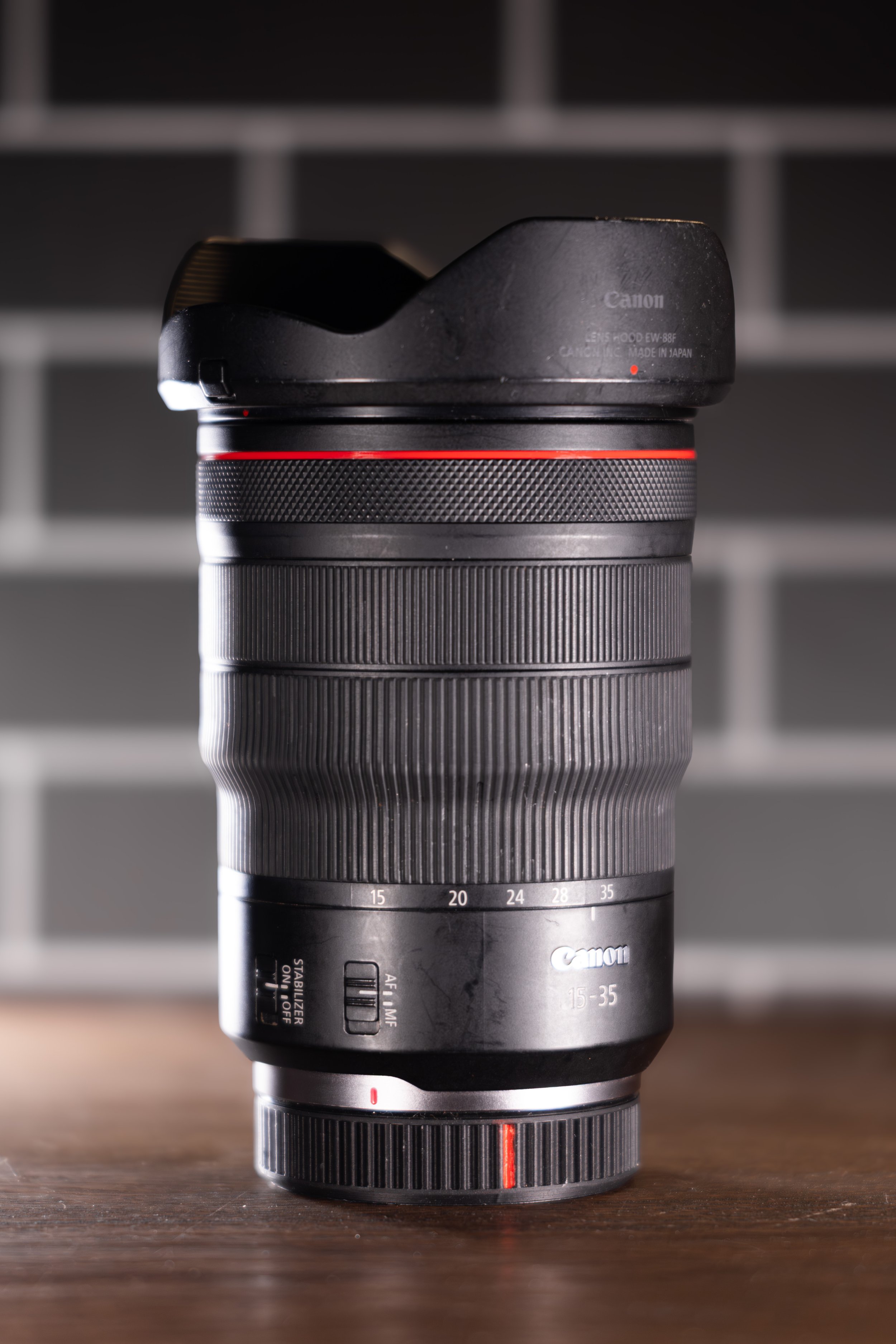
Canon RF 15-35mm F2.8 L IS USM
This is one of my wide-angle workhorses.
I use it for interiors, wedding reception dance floors, dramatic wide portraits, environmental shots, and anything where I want to show a lot of space. It is especially useful when I want to get right into the action and create something more personal and immersive.
Canon lists the RF 15-35mm F2.8 with a minimum focusing distance of 0.92 ft / 0.28m, 0.21x maximum magnification at 35mm, 16 elements in 12 groups, an 82mm filter size, 9 circular aperture blades, Nano USM autofocus, and 5 stops of image stabilization.
This lens is great. I do not really have anything bad to say about it. I just do not use it as much as I used to because I fell in love with another ultra-wide lens that covers some of the same creative territory.
Where this lens really shines is when I want to be in the mix. On the dance floor, I can get close, exaggerate perspective, and make the viewer feel like they were right there. I have also loved using it for astrophotography. A wide f/2.8 lens in the desert can soak up the Milky Way beautifully.
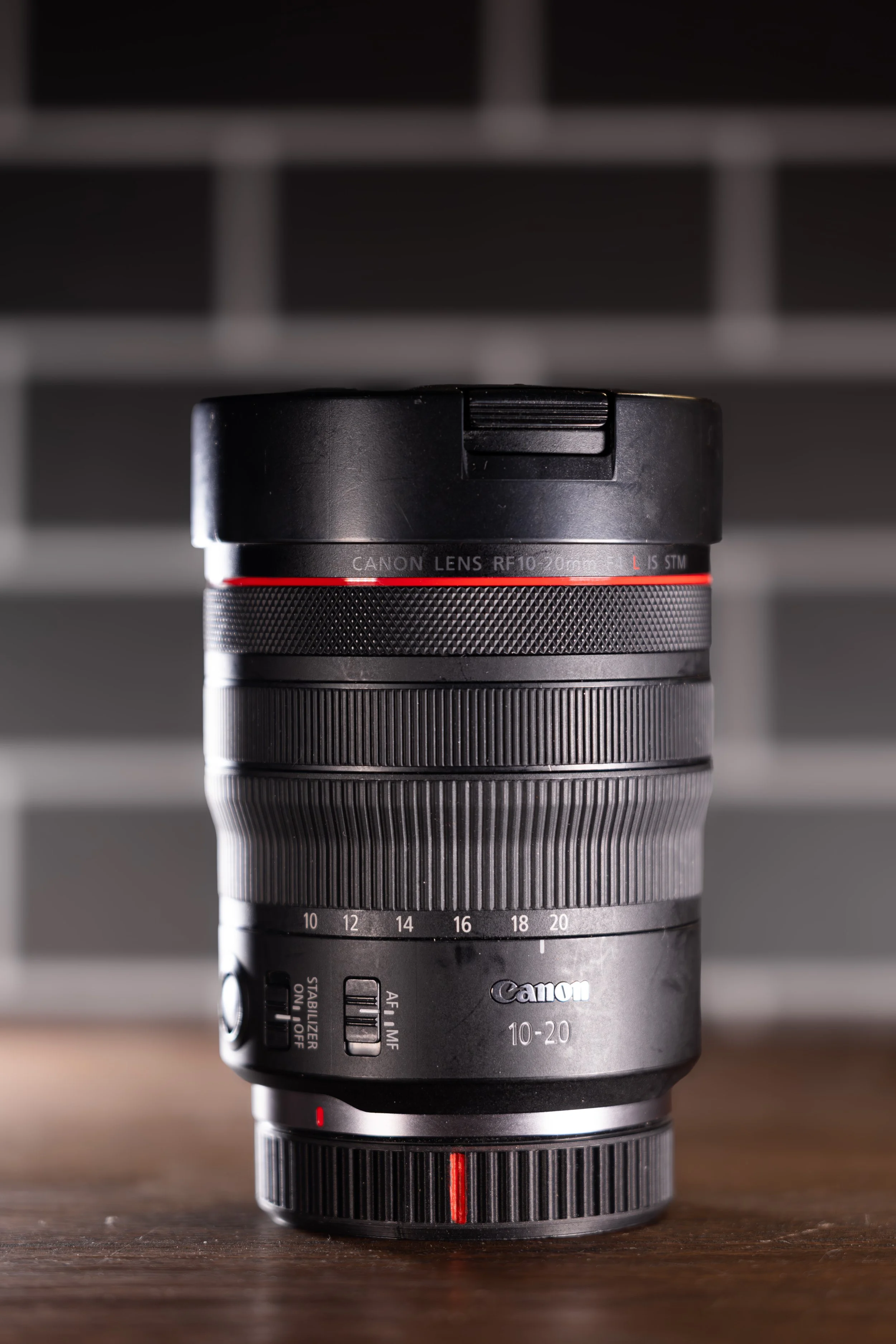
Canon RF 10-20mm F4 L IS STM
This is the weird one, and I mean that as a compliment.
Not a lot of photographers are going to have this lens, and that alone makes it useful. It gives me a look that stands out because it is not something everyone is shooting with.
Canon lists the RF 10-20mm F4 as a 10-20mm full-frame RF lens with a constant f/4 aperture, minimum focusing distance of 0.25m / 9.8 inches, 0.12x maximum magnification at 20mm, and an extremely wide diagonal angle of view of about 130° 25’ to 94°. Canon also notes the lens uses 16 elements in 12 groups, including one Super UD element, three UD elements, and three aspherical elements.
This lens is rectilinear, which means it is designed to keep straight lines looking straight instead of turning everything into a fisheye-style curve. That matters for real estate, architecture, interiors, and tight spaces.
For real estate, I can walk in with this lens and a flash and cover most of what I need. It lets me work in tight rooms where other photographers may not be able to get the same shot.
For weddings, it is a specialty tool. It lets me photograph huge groups from only a few feet away when space is terrible. It is also great for behind-the-scenes shots because the perspective is so different.
The downside is the front element. It protrudes, so I am careful with it. I usually do not use lens caps much because they slow me down, but with this lens, the cap goes in my pocket and goes back on as soon as I am done shooting.
The Lens I Want Next: Canon RF 100-300mm F2.8 L IS USM
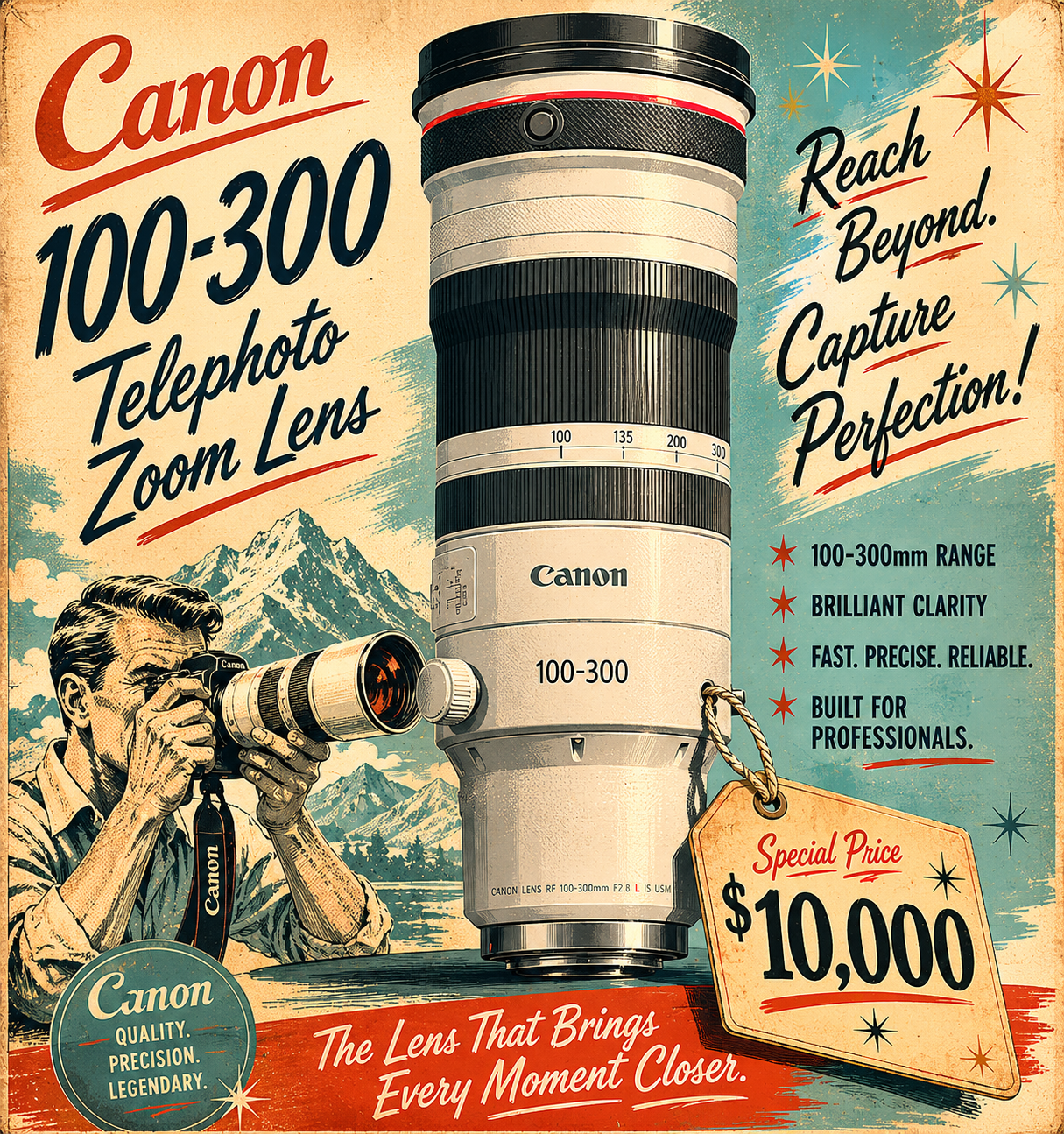
This is the next big lens I want.
It is not a casual purchase. It is around $9,500 before tax, which means in the real world it is basically a $10,000 lens. But I have rented it before, and it feels like something I should have on almost every shoot.
The RF 100-300mm F2.8 gives you the reach of a serious telephoto lens with a constant f/2.8 aperture. For weddings, events, ceremonies, sports, performances, and candid work, that is a monster combination.
I am not saying everyone needs a $10,000 lens. Most people absolutely do not. But for the way I shoot, I can see exactly where it would fit.
Someday, I will make it happen.
How I Choose What to Bring
I do not bring seven lenses to every job just because I own them.
For a family portrait, I am usually bringing the 50mm and 85mm. If I know we are dealing with a lot of people or a tight space, I may bring the 10-20mm so I can create something different and make the space work.
For real estate, I can usually bring the 10-20mm and a flash. That is enough.
For weddings, it depends. I may want the 28-70mm for flexibility, the 70-200mm for candids, the 85mm for portraits, the 100mm for details, and a wide-angle lens for receptions or tight interiors. But even then, I am not trying to use everything just to use everything. The goal is always the photo.
The Honest Truth About Gear
I do not baby my lenses.
You can often find me doing little soft tosses with them in my hands to rotate the lens and line it up the right way before mounting it. When I am done using one, it usually slides right back into the bag. Am I always looking at exactly what else is in the bag? No. I am focused on getting the shot.
That does not mean I am careless. I send my gear in for regular checkups and maintenance because I never want to be at a wedding and have something fail. But I also believe gear is meant to be used. If I can get 10 years out of a lens, that is amazing.
I still think about some lenses I have sold and occasionally regret letting them go. But most of the time, I am happy moving on to the next tool that makes more sense for how I work now. There are at least a couple lenses in my bag I could probably sell, but I know I might regret it. And every year the resale value drops a little more, which somehow makes me want to hold onto them even more.
Final Thoughts
I did not get all of this overnight.
This lens kit took years to build. I have watched reviews, rented gear, sold gear, regretted selling gear, bought better gear, and learned what actually works for the way I shoot.
The glass is the investment. The cameras will keep changing. The lenses are what create the look, the separation, the compression, the perspective, and the feeling.
I hope you enjoyed this breakdown of my lenses. Now that I have talked through all of this, I probably need to go add a few more things to my Amazon wish list.